

Olga’s Note
Dear Ladies,
Welcome to Issue 20 of The Elegance Edit – your weekly guide to body language, elegance, and timeless style. Each edition offers thoughtful insights to help you feel more poised, confident, and graceful in every part of your life.
It’s hard to believe that we’re already 20 editions into The Elegance Edit. Some of our elegant ladies have joined in this time, and some have been working with us at L’Elegance since long before, and i thank you all. In the spirit of the season, this week's exciting edition will cover a monumental day; Thanksgiving.

Upcoming Events
ELEGANCE REFINEMENT MENTORSHIP
A Transformational Coaching Experience in Grace, Confidence & Modern Feminine Presence — live with Olga Kuznetcova.
✨ New Classes Added: Table Etiquette & Extended Practice Sessions!
Enrollment for Cohort #3 is now open.
Schedule a call with our Educational Advisor to learn more and secure your spot with an exclusive early-enrollment discount.
📍 Live on Zoom | 🗓 JANUARY, 2026| ⏰ Tuesdays & Thursdays
USA ELEGANCE TOUR
Last one this year!
A transformative in-person weekend across the U.S. where women learn elegance, confidence, body language, and the art of presence.
📍 December 19–21 — San Francisco, CA
NYC IN-PERSON CLASSES
These classes can be attended by beginners looking to learn the foundations with coaching from me in person.
WEDNESDAY 3 DECEMBER 2025
6:00 PM - 8:00 PM Social Etiquette + Elegant Body Language
FRIDAY 5 DECEMBER 2025
3:30 PM - 5:30 PM Romantic Body Language
SATURDAY 6 DECEMBER 2025
10:00 AM - 12:00 PM Heels Class Foundational
12:30 PM - 2:30 PM Heels 2.0: Posing for Formal Events

Dining With Elegance
Mastering Thanksgiving Table Etiquette

Thanksgiving dinner presents unique challenges that formal restaurant dining never does. The family-style service, the mix of generations and personalities around one table can create opportunities for either awkwardness or elegance. The difference lies not in memorizing obscure rules, but in understanding the principles of thoughtful dining.
The Art of Serving Yourself
The moment platters begin their journey around the table reveals more about your social awareness than you might imagine. Elegant diners understand that family-style service is fundamentally about collective consideration, not individual appetite.
When a dish reaches you, take a moment to assess what remains and how many people still need to be served. This quick calculation informs your portion size without requiring obvious deliberation. If you're among the first served and the platter looks abundant, feel free to take a generous portion. If you're midway through and supplies look limited, show restraint.
The cardinal rule: never reach across another person. If the cranberry sauce sits beyond comfortable reach, make eye contact with the person nearest to it and ask, "Would you mind passing the cranberries?" This simple request is always preferable to stretching across your neighbor's plate or, worse, standing up to grab something.
Once you've served yourself, place your napkin on your lap immediately. It stays there throughout the meal, used discreetly to dab your mouth—never to wipe aggressively. If you must leave the table during dinner, place your napkin on your chair, not on the table. A napkin on the table signals you've finished the meal entirely.

The Compliment Conundrum
Thanksgiving hosts pour tremendous effort into creating memorable meals, and acknowledging this matters. Yet there's an art to expressing appreciation without creating awkwardness or obligation.
The most elegant compliments are specific rather than generic. "This turkey is perfectly moist" lands better than "Everything is delicious." Specificity shows you're actually paying attention rather than offering reflexive politeness. Notice particular details: the seasoning on the vegetables, the flakiness of the pie crust, the balance of flavors in the stuffing.
Timing matters too. One genuine compliment early in the meal and perhaps one more toward the end creates warm acknowledgment without becoming repetitive. Constant commentary on every dish feels performative and can actually create pressure rather than appreciation.
Wine and Beverage Grace
The Thanksgiving table often features wine, cocktails, and various beverages, creating its own subset of etiquette considerations. How you handle drinks reveals your level of social sophistication.
When wine is being poured, the general principle is to wait for your host to initiate service. Always pour for the person next to you before filling your own glass. Hold the bottle toward the base, pour steadily, and give a slight twist as you finish to prevent drips.
If you're drinking wine, hold the glass by the stem, not the bowl. This prevents warming the wine and keeps the glass clean of fingerprints. For water glasses or cocktails served in stemless glasses, hold near the base to avoid leaving marks around the rim.
Toasting at Thanksgiving tends to be informal, but if someone offers one, put down your utensils, pick up your glass, and give them your attention. Make eye contact during the toast and take a sip when others do.
Declining refills requires no elaborate explanation. A simple "I'm fine for now, thank you" with a gentle hand gesture over your glass suffices. If someone persists, "I'm pacing myself" or "I'm switching to water" ends the discussion gracefully without requiring detailed justification.
The Graceful Departure
How you finish the meal matters as much as how you began it. The transition from dinner to its conclusion requires the same attention to courtesy and timing that you've maintained throughout.
Wait for the host to signal that the meal has concluded before rising from the table. This usually happens when they stand or begin clearing dishes. At large family gatherings, this signal might be less clear, but watch for the moment when several people begin to rise or when coffee and dessert are mentioned.
If you're at a family member's home where helping is expected, offer assistance genuinely but accept refusal gracefully. "May I help clear?" shows consideration. If declined, don't insist repeatedly. Some hosts prefer managing cleanup themselves, and respecting that preference is its own form of courtesy.
When thanking your hosts, specificity matters here too. "Thank you for such a wonderful evening" is fine, but "Thank you for bringing everyone together and creating such a warm gathering" acknowledges the emotional labor behind the meal, not just the food.
Olga’s Tips
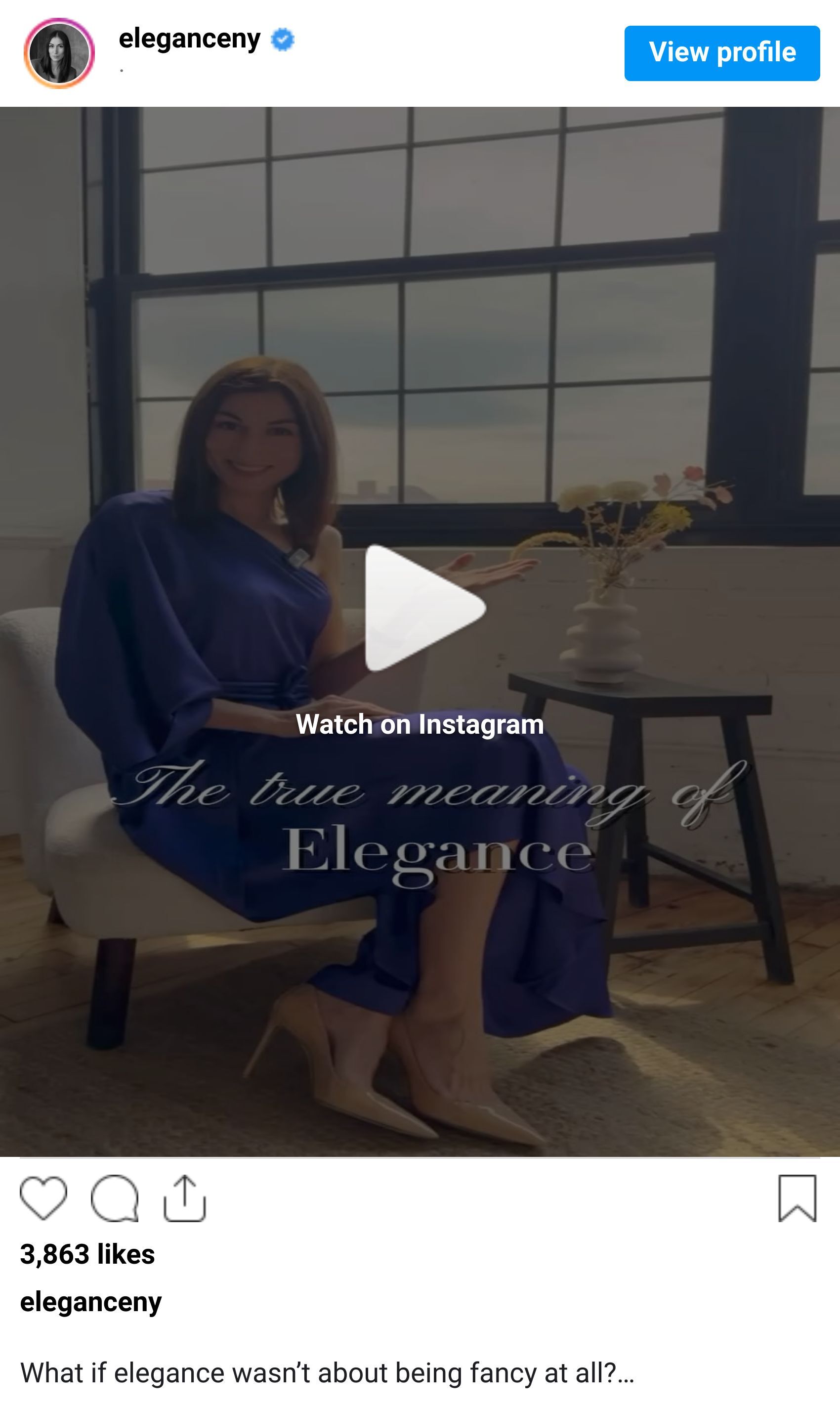
Elegance Tip of the week
Olga’s Recommendations
The Ideal Gift

The most elegant Thanksgiving host gift demonstrates genuine consideration rather than obligation. Skip the wine bottle that gets lost among others or the last-minute flowers that require immediate attention when your host is managing final dinner preparations. Instead, consider a beautiful coffee table book on art, design, or photography that reflects your host's interests – something they'll enjoy long after the dishes are cleared, and can be a wonderful conversation starter once you arrive, critical if you are meeting the other guests for the first time.
Game
The Elegance Game
In the following week, we will share the answer to this question. Click the answer that you think is right.

When you receive an urgent call during an in-person conversation, what demonstrates the most elegant approach to handling the interruption?
- Answer immediately without explanation since truly urgent matters always take priority over social niceties
- Glance at the caller, apologize sincerely by saying "I'm so sorry, I need to take this, it will just be two minutes," then step away to a private area to handle the call
- Silence the call and excuse yourself briefly
- Let it ring while continuing your conversation to show the person you're with that they have your complete attention, then return the call later without mentioning it
